Startup raises $20M to power floating AI data centers with ocean heat
Drogue aims to bypass land grid bottlenecks by placing AI servers on ships powered by thermal energy from deep and surface ocean waters.
Solving the Land Grid Bottleneck
Data center developers face a growing timing problem. Demand for artificial intelligence computing has surged tenfold over the past three years, yet building power-connected facilities on land takes eight to ten years. Land-based projects require extensive real estate acquisition, utility approvals, and coordination with regional power grid operators.
Washington, D.C.-based startup Drogue believes it has found a way around these land-use delays. Founded six months ago by former military aviator Sam Sipe, the company aims to place data centers directly on ocean vessels, bypassing traditional electrical grids entirely.
How Ocean Thermal Energy Powers Servers
To supply electricity to onboard servers, Drogue uses ocean thermal energy conversion, a concept first developed in the 1950s. The system acts like a heat pump in reverse, relying on the temperature gap between warm surface water and cold water deep underwater.
Warm surface water first absorbs heat from the servers to cool them down. That warmed water is then used to boil liquid ammonia, which turns into gas at minus 28 degrees Fahrenheit. Expanding ammonia gas drives a turbine to generate electricity. Cold water pumped from 1,000 meters below the surface then cools the gas back into a liquid, completing a continuous closed loop.
Capital, Safety Approval, and Deployment Timeline
Drogue has raised $20 million from investors including XYZ Venture Capital, Toyota Ventures, Tamarack Global, Dream, FDVC, Garuda Ventures, Flexcap, Boost VC, and Slow Ventures. The company has also secured preliminary safety approval, known as an approval in principle, from the American Bureau of Shipping.
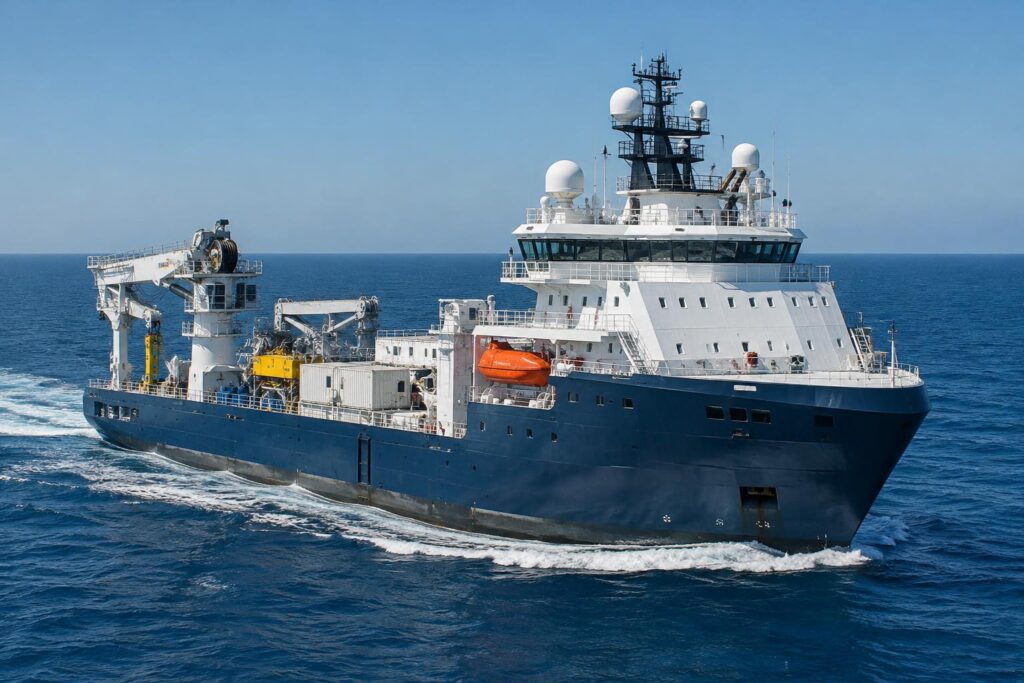
The startup is currently acquiring its first ship to build a multi-megawatt prototype planned for sea deployment in early 2028. Future iterations are expected to use custom floating structures similar to offshore oil platforms, with each vessel designed to operate at sea for roughly a decade.
Why Ocean Processing Matters for Builders and Investors
For compute infrastructure builders, processing data at sea eliminates the need for expensive subsea power cables back to shore, as data can be transmitted wirelessly or via satellite networks at a fraction of the cost. The ocean provides a vast, consistent thermal resource that avoids land real estate scarcity and utility interconnect queues.
Investors and developers should monitor whether Drogue can successfully manage long-term oceanic challenges like corrosion, biofouling, and deep-water pumping mechanics when its initial vessel reaches open waters in 2028.
How does this story land?
One tap per reader.
Quick poll
Are ocean data centers viable?
One vote per reader. Results show after you vote.
Ask this story
Answers are written by AI from this story only. They can be wrong.