Meta teams up with INCA to test AI smart glasses for blind Canadians
Meta is funding Canadian non-profit INCA and donating AI glasses to gather direct product feedback from people who are blind or have low vision.
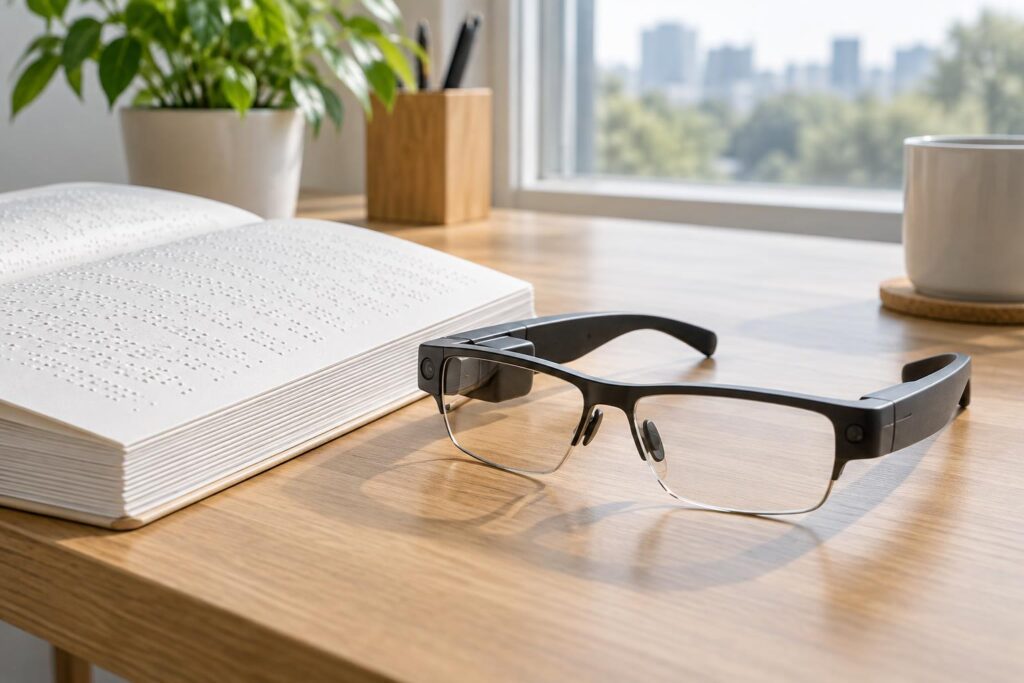
Meta partners with Canadian non-profit INCA
Meta has announced a partnership with INCA, a Canadian non-profit organization established in 1918 that supports people who are blind or have low vision. The collaboration aims to bring Meta’s artificial intelligence smart glasses to more individuals across Canada who are blind, deafblind, or living with low vision.
Through this alliance, Meta will provide funding to INCA across four operational pillars. The non-profit will engage community members across Canada to study their experiences with wearable devices. It will also support community champions who will host in-person product demonstrations, offer peer training, and collect direct feedback.
The insights gathered from these trials will feed back directly to Meta’s accessibility and product engineering groups. INCA will also use the funds to produce guides, instructional materials, and learning resources accessible anywhere and at any time.
Device donations for employment programs
In addition to providing funding, Meta is donating pairs of its AI glasses to INCA’s employment program, known as ‘Ouvrir les portes du travail’ (Opening Doors to Work). This initiative provides career-seeking participants with practical training and resources to see how wearable devices can assist them in securing jobs and carrying out workplace tasks.
While consumer users often use smart glasses for streaming audio, taking hands-free calls, or real-time language translation, Meta notes that visual accessibility presents a distinct use case. For blind or low-vision users, onboard AI can identify nearby objects, read text, and audibly describe the surrounding environment, supporting greater daily independence.
Angela Bonfanti, president and chief executive of INCA, noted that individuals with low vision offer critical insights into existing barriers and can directly influence the technical direction of assistive hardware. Maxine Williams, vice president of accessibility at Meta, stated that direct engagement with daily users helps the company build better products overall.
Global accessibility push for wearable hardware
The Canadian partnership expands Meta’s existing efforts to deploy smart glasses across international accessibility networks. Meta previously collaborated with the Blinded Veterans Association in the United States to distribute Ray-Ban Meta glasses to blinded military veterans, alongside working on similar initiatives with Vision Ireland.
By integrating assistive computer vision capabilities into mass-market frames, Meta is pursuing real-world testbeds to evaluate how multi-modal AI systems perform outside laboratory settings. These programs offer early data on how everyday users interact with visual recognition tools under unpredictable lighting, varying distances, and complex physical environments.
How does this story land?
One tap per reader.
Quick poll
Can consumer AI glasses become the primary assistive tech for people with vision loss?
One vote per reader. Results show after you vote.
Ask this story
Answers are written by AI from this story only. They can be wrong.