Why Early Electric Cars Were Marketed Exclusively to Women
At the dawn of the automotive age, electric cars competed with steam and gasoline, finding a niche among women and doctors before gasoline took over.
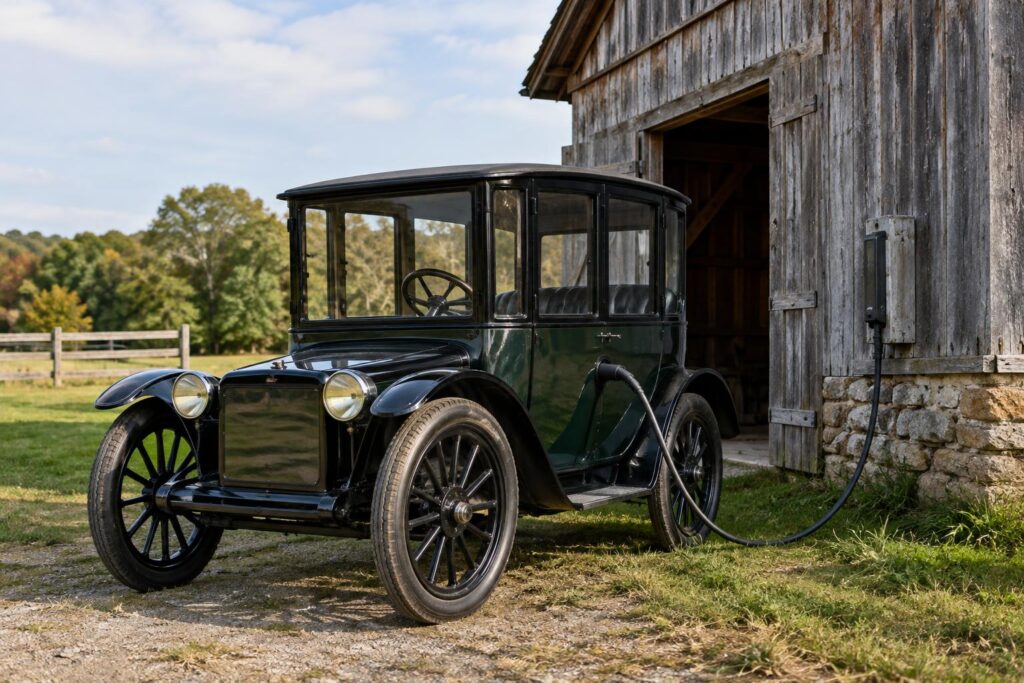
At the turn of the twentieth century, the automobile industry was young and rapidly expanding. Car makers experimented with steam, gasoline, and electricity. No one knew which power source would eventually dominate the market. Early gasoline cars were loud, smelled bad, and required a physical hand crank to start. Steam cars carried a risk of fire and became very hot.
Electric vehicles offered a cleaner and much simpler experience. Drivers could start them easily by turning a key, with no foul exhaust to worry about. Because of these features, early electric car makers marketed their vehicles primarily to women. Advertisements also targeted doctors who needed to make quiet house calls at night without waking neighbors.
The Technology of Early Charging
Charging an electric car required specialized equipment because home electricity grids supplied alternating current, while car batteries required direct current. Inventors like Peter Cooper Hewitt developed mercury-arc rectifiers to convert this power. These units used glass tubes containing liquid mercury to change the current, though a full charge could take up to twelve hours.
Carriage makers also began shifting to electric vehicles as traditional horse-drawn carriages fell out of favor. S.R. Bailey & Company began building electric cars, initially using alkaline batteries designed by Thomas Edison. When those early batteries proved unreliable and leaked, the company switched to lead-acid batteries that provided a range of up to eighty kilometers.
Early Adoption and Challenges
Wealthy early adopters, such as Fannie Goodnow in Massachusetts, installed home charging stations in their barns. Just like modern electric vehicle owners, early motorists faced challenges with infrastructure. Charging plugs were not standardized, forcing travelers to carry various adapters and spare cables to ensure they could recharge on the road.
Ultimately, the rise of the gasoline-powered engine changed the market. The invention of the electric starter for gasoline cars removed the need for a hand crank, and mass production drove down costs. As gasoline vehicles advanced, the early era of electric cars came to a close for several decades.
How does this story land?
One tap per reader.
Quick poll
Would you buy a vintage electric car from 1908 as a daily driver?
One vote per reader. Results show after you vote.
Ask this story
Answers are written by AI from this story only. They can be wrong.