Ten Years Ago, a Probe Landed on a Comet and Bounced Twice
In 2014, the Philae probe made history by landing on Comet 67P, though it bounced twice and vanished for nearly two years.
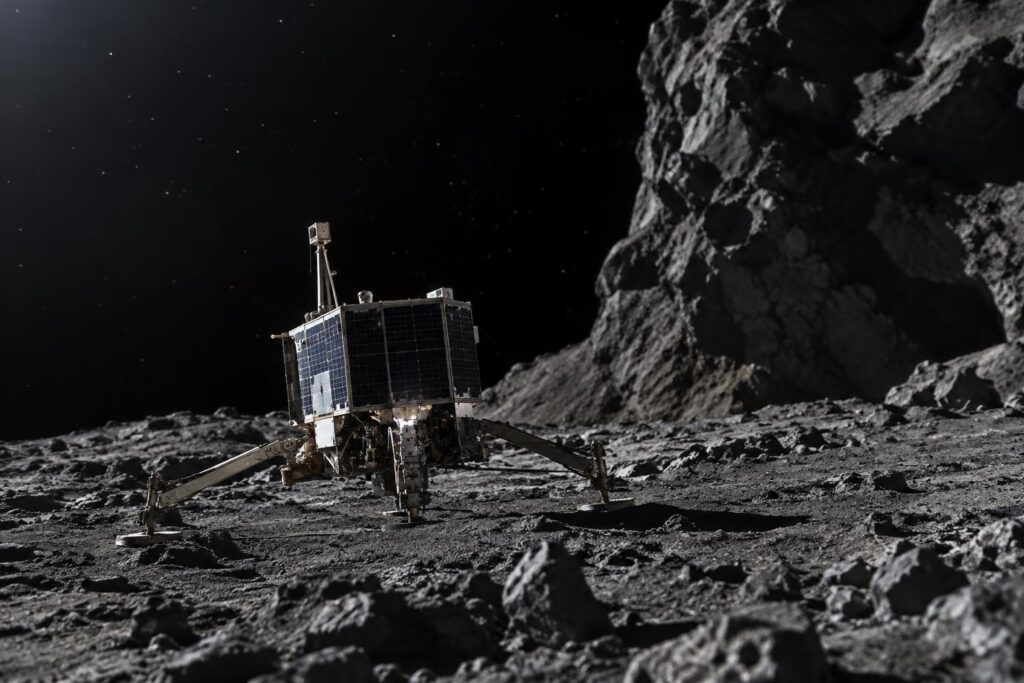
Ten years ago, a small robotic probe named Philae made history by touching down on a comet. The landing did not go as planned. Built by the European Space Agency, Philae was supposed to anchor itself to Comet 67P using special harpoons. When the probe reached the surface, the harpoons failed to fire.
A Bumpy Ride on a Comet
The failure of the harpoons caused the probe to bounce high into space. Its first bounce sent it half a mile above the comet before gravity pulled it back down. After a second, smaller bounce, the probe finally came to rest. Because tracking cameras lost sight of it, mission controllers did not know where it had ended up.
Scientific Discoveries in the Dark
Philae relied on solar panels for power, but it came to rest in a dark crevice where sunlight could not reach them. Using its backup batteries, the probe operated for more than two days. During this short time, its instruments gathered important data, including the detection of organic molecules never seen on a comet before. Nearly two years later, its companion spacecraft, Rosetta, finally spotted the lost lander resting on its side in a rocky crack.
- Philae landed on Comet 67P on November 12, 2014.
- Harpoons meant to secure the probe failed to fire upon touchdown.
- The probe operated for two days on battery power before being lost.
How does this story land?
One tap per reader.
Quick poll
Should we send more probes to comets?
One vote per reader. Results show after you vote.
Ask this story
Answers are written by AI from this story only. They can be wrong.