SpaceX launches 15th Starship test and deploys Starlink V3 satellites
SpaceX launched its 15th Starship test flight, placing 26 V3 Starlink satellites into orbit. The team skipped a booster catch attempt, sending the Super Heavy to a Gulf splashdown instead.
Starship completes orbital insertion and satellite deployment
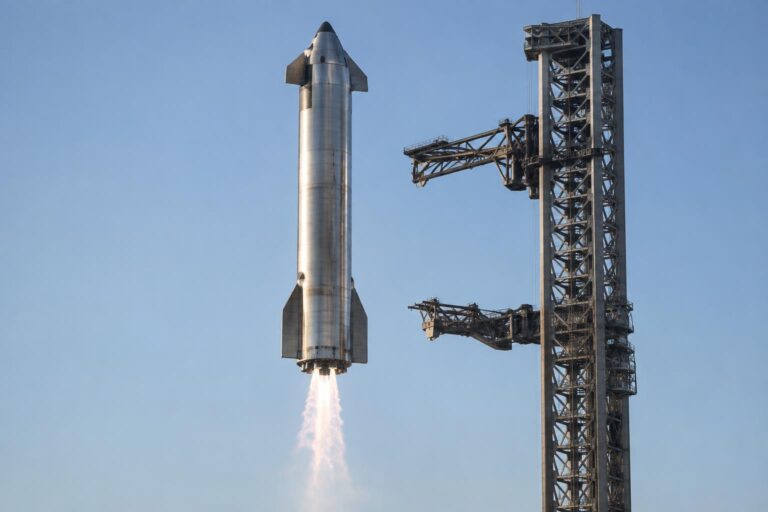
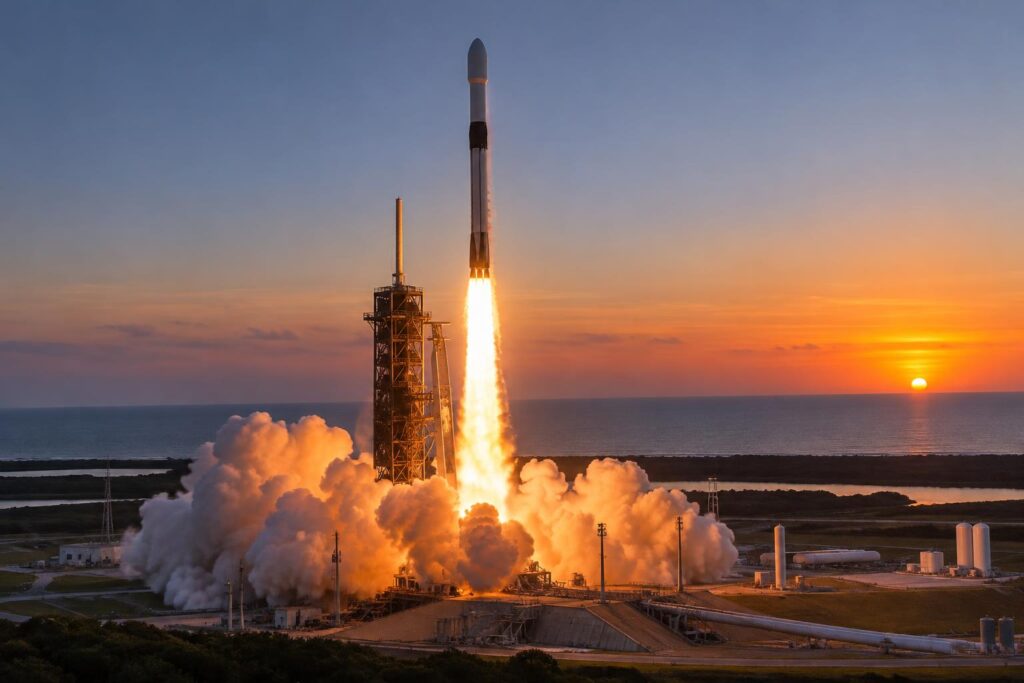
SpaceX launched the 15th test flight of its Starship rocket from Starbase in South Texas. The Super Heavy booster lifted the vehicle using 33 Raptor 3 engines. The upper stage, known as Ship, separated from the booster via hot-staging about two and a half minutes into the flight. Ship fired its own engines to reach low Earth orbit at an altitude of around 170 miles.
During the mission, Ship deployed 26 Starlink V3 satellites into orbit over a 42-minute period. This is the second batch of V3 satellites sent to space. The upgraded V3 models add a terabit of data capacity to the network, which SpaceX states is equal to ten Falcon 9 launches carrying older V2 satellites. Three of the deployed satellites carried cameras to inspect Ship’s heatshield tiles and hardware from orbit.
Booster catch aborted for ocean splashdown
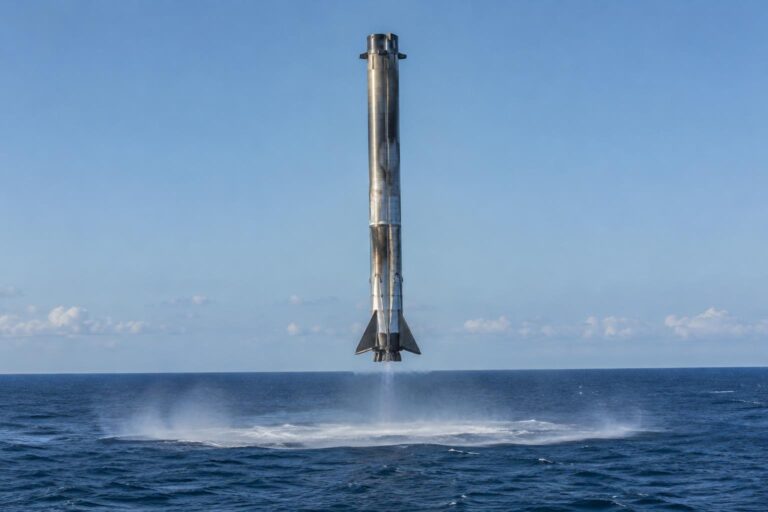
SpaceX originally aimed to catch the Version 3 Super Heavy booster back at the launch site using mechanical arms on the tower. However, the company aborted the recovery attempt. Instead, the booster executed a controlled splashdown in the Gulf of Mexico about six and a half minutes after liftoff.
SpaceX has previously recovered three Version 1 Super Heavy boosters and reused two of them. The company is now testing the newer Version 3 design to demonstrate rapid launch vehicle reuse.
Extended mission plans for upper stage recovery
The upper stage was set to complete 14 orbits over 21 hours before attempting a return to the launch site. SpaceX scheduled three contingency checkpoints during the flight to evaluate vehicle health. If systems are not optimal for a tower catch, Ship will be directed to splash down in the Pacific Ocean or the Gulf of Mexico instead of returning to Starbase.
SpaceX aims to make Starship fully reusable to support high-frequency launches. The company plans to use the vehicle to build out its satellite constellation, support potential orbital data centers, and serve as a lunar lander for NASA’s Artemis III astronaut mission.
How does this story land?
One tap per reader.
Quick poll
Should SpaceX skip booster catches?
One vote per reader. Results show after you vote.
Ask this story
Answers are written by AI from this story only. They can be wrong.