Scientists Set World Record With Record-Breaking X-Ray Power
Researchers have generated record-breaking X-ray flashes lasting just 300 attoseconds and focused into a microscopic area.
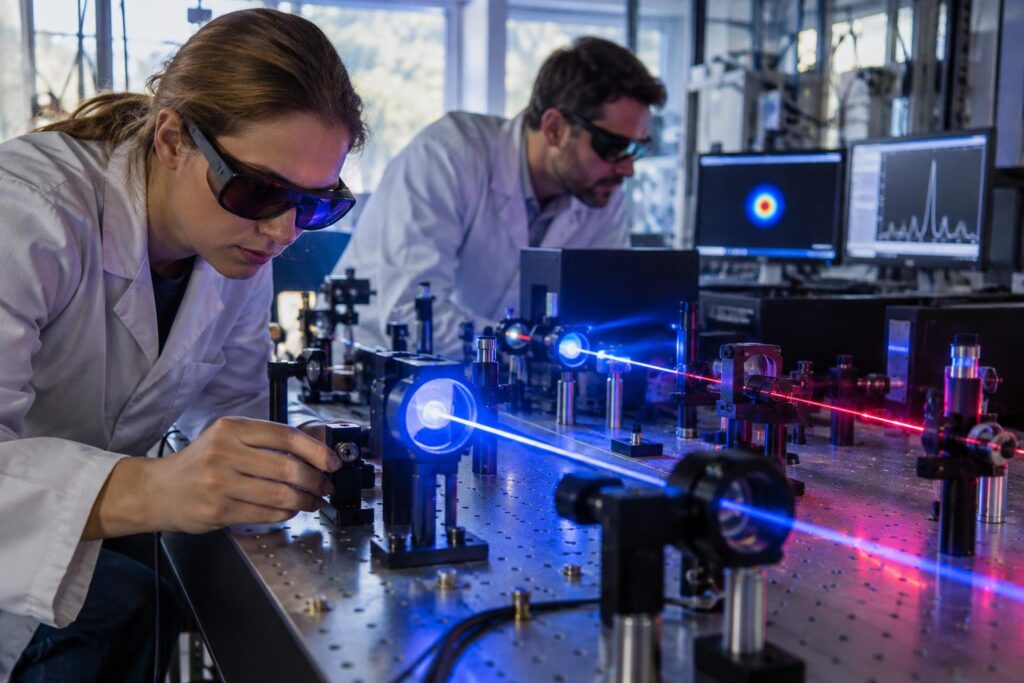
Researchers have set a new world record by producing extremely intense X-ray flashes that last for just 300 attoseconds. An attosecond is a billionth of a billionth of a second. The team used a major research facility called the European XFEL to concentrate these brief pulses into an area roughly 100,000 times smaller than the cross-section of a human hair. By packing so much energy into a tiny space, the scientists created a powerful beam that could help study how electrons move inside atoms and molecules.
Focusing Light With Precision Mirrors
To achieve this concentration, the research team used a specialized optical setup known as an advanced Kirkpatrick-Baez system. This system includes two very precise mirrors that guide the beam in different directions. Each pulse reflected four times, with one mirror focusing the X-rays vertically and the other horizontally. The resulting focal spot measured a mere 180 by 330 nanometers. Directing the energy into this microscopic zone allowed the team to reach unprecedented levels of intensity and fluence, which measures the energy delivered to a specific area.
Testing Limits on Copper Sheets
To confirm the extreme intensity of the beam, the scientists aimed the X-rays at a thin sheet of copper. The intense flashes knocked electrons out of the innermost shells of the copper atoms. When electrons from other parts of the atoms replaced them, they released energy as X-ray light. At normal levels, this light travels in all directions. Under this extreme illumination, however, the emitted light stimulated other atoms to release additional X-rays in a single direction. This amplification effect, along with a distinct signal leveling known as saturation, confirmed the record-breaking power of the flashes.
- Researchers used the European XFEL facility to produce 300-attosecond X-ray pulses.
- Special mirrors focused the beam into a spot measuring 180 by 330 nanometers.
- Tests on copper confirmed peak intensities exceeding 10 to the power of 20 watts per square centimeter.
How does this story land?
One tap per reader.
Quick poll
Will attosecond X-rays let us control chemical reactions?
One vote per reader. Results show after you vote.
Ask this story
Answers are written by AI from this story only. They can be wrong.