New method uses tiny diamond flaws to speed up quantum computing search
A new computational technique developed by a Princeton Plasma Physics Laboratory researcher simplifies the search for diamond materials capable of powering future quantum computers.
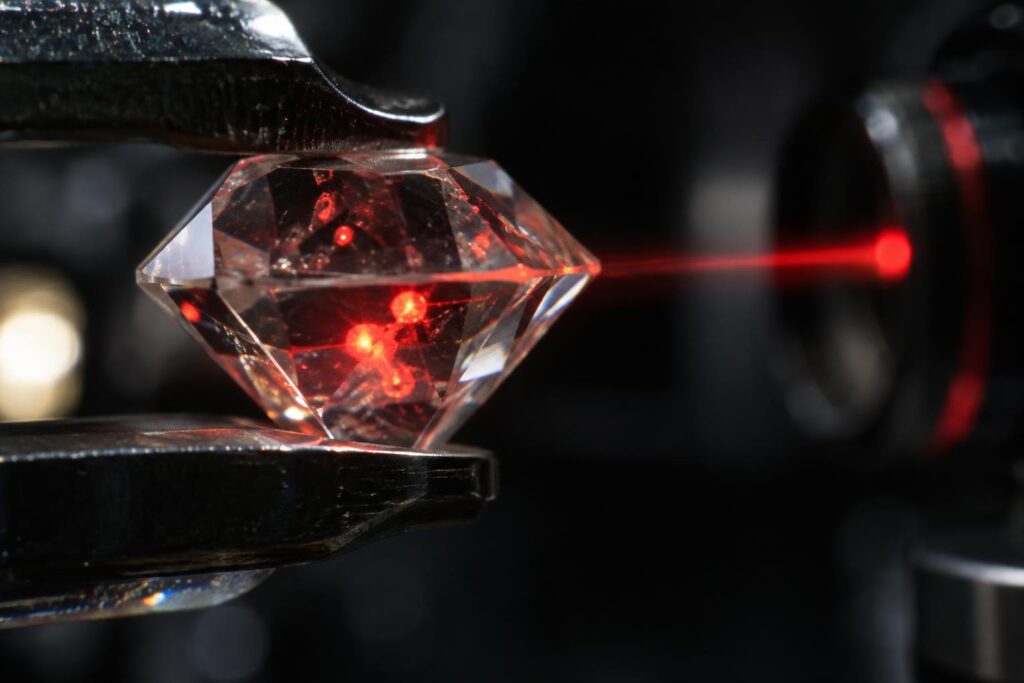
Researchers are looking closely at diamonds to build better quantum computers and sensors. Unlike many other materials, certain diamonds can maintain their quantum properties at room temperature. However, finding the right materials has been slow and difficult.
A scientist at the U.S. Department of Energy’s Princeton Plasma Physics Laboratory created a new computational method to find promising diamond materials much faster. Instead of simulating large diamond structures, the technique isolates a tiny region of 16 to 30 atoms around a defect. This allows researchers to use established chemical calculation methods to study diamond flaws efficiently.
New Diamond Defects Discovered
The approach has already identified new potential candidates for quantum technology, including defects involving boron and oxygen. Traditional research has mainly focused on nitrogen-vacancy centers in diamonds. The newly studied defects show different optical properties, such as producing blue or ultraviolet light.
These distinct responses could allow scientists to combine multiple types of qubits within a single device. Researchers might interact with one group of qubits using light without disturbing another group.
Bridging Physics and Chemistry
The findings point to a broader shift in how scientists approach quantum technology. While the field is largely driven by physics, applying chemical principles to solid materials could help experts design engineered qubits for specific tasks in the future.
How does this story land?
One tap per reader.
Quick poll
Will quantum computing arrive soon?
One vote per reader. Results show after you vote.
Ask this story
Answers are written by AI from this story only. They can be wrong.