NASA Swift Telescope Re-Enters Earth After 22 Years in Space
NASA's Neil Gehrels Swift Observatory has returned to Earth after operating for nearly 22 years.
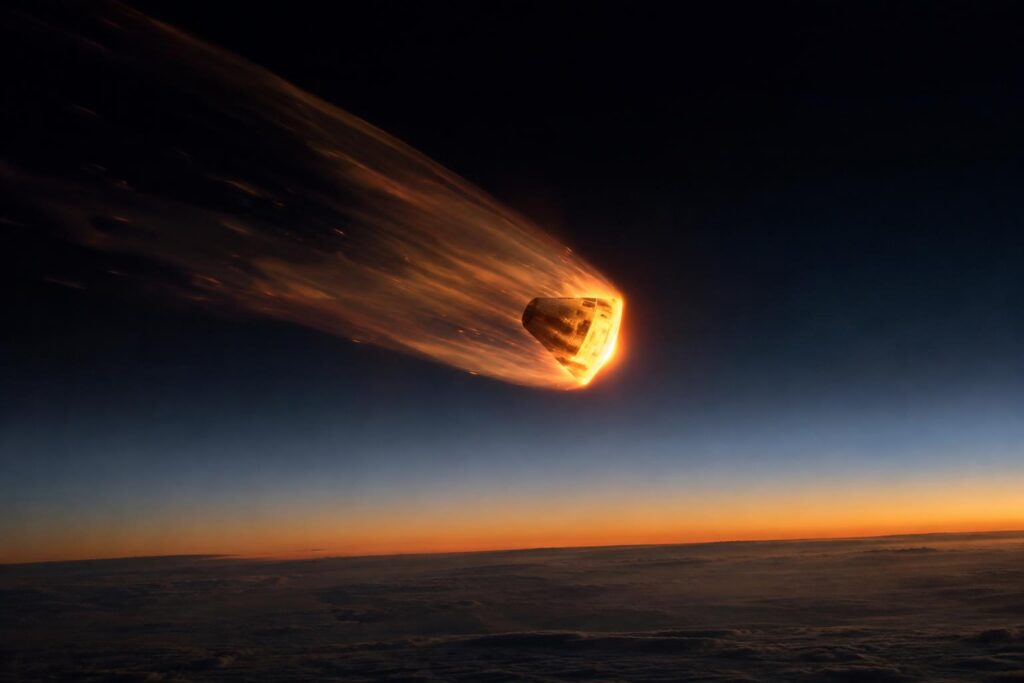
NASA’s Neil Gehrels Swift Observatory has re-entered Earth’s atmosphere, concluding a space mission that lasted almost 22 years. The spacecraft, launched in 2004, operated for more than ten times longer than its initial two-year design life. The U.S. Space Force confirmed the re-entry occurred over North Sumatra, Indonesia.
Pioneering Cosmic Observations
Swift carried three telescopes built to study powerful cosmic explosions. Its primary goal was observing gamma-ray bursts, which are intense flashes of high-energy radiation linked to collapsing massive stars or merging compact objects. The observatory could detect multiple types of light to examine these extreme events thoroughly.
A Legacy of Rapid Response
A key feature of the observatory was its speed. When Swift spotted a sudden cosmic outburst, it quickly turned its instruments toward the source and alerted other facilities worldwide. This rapid coordination allowed researchers to study brief astronomical phenomena before they faded away.
Expanding Beyond Original Goals
Over its long lifetime, the mission expanded far beyond gamma-ray bursts. Swift helped scientists study active galaxies, X-ray flares from stars, and supernovae. Its instruments also tracked comets and asteroids closer to home within our solar system, leaving a lasting impact on modern astronomy.
How does this story land?
One tap per reader.
Quick poll
Should space agencies prioritize long-lasting orbital telescopes over new designs?
One vote per reader. Results show after you vote.
Ask this story
Answers are written by AI from this story only. They can be wrong.