MIT Implant Uses Sound Waves to Push Brain Cancer Drugs Deeper
Researchers at MIT have designed a new implantable device that uses ultrasound waves to help medicine spread through the brain and target aggressive tumors.
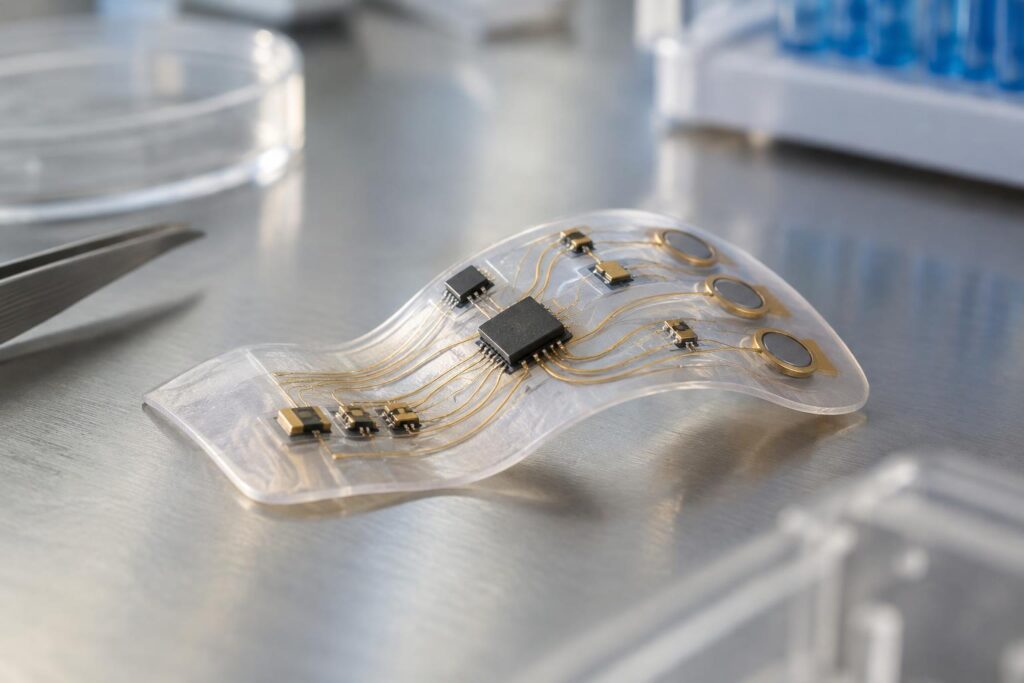
Treating brain tumors is difficult because it is hard to remove every cancer cell, and medicines struggle to cross the protective barrier around the brain. Surgeons often remove as much of a tumor as possible, but remaining cancer cells frequently cause the disease to return. To address this issue, researchers at the Massachusetts Institute of Technology have built a new implantable tool to deliver treatments directly where they are needed.
Combining Medicine and Sound Waves
The new device combines a small drug reservoir with an array of tiny ultrasound transducers. These are parts that convert electrical energy into sound waves. When implanted during surgery, the device can release drugs slowly over time. At the same time, the sound waves help push the medicine farther into the surrounding tissue and help it cross the natural barrier that normally blocks many substances from entering the brain.
Wireless Control and Future Uses
A wireless controller allows doctors to program the exact ultrasound dosages and infusion lengths needed for a patient. Tests in tissue models and mice showed that using sound waves allowed test molecules to spread much further than standard delivery methods alone. While the team focused on aggressive brain tumors, the technology could potentially be adapted for other soft tissues and different types of medical payloads in the future.
- Device holds a small reservoir of fluid for slow release.
- Twenty-four miniature ultrasound transducers generate sound waves.
- Wireless controls let doctors manage dosages and treatment timing.
How does this story land?
One tap per reader.
Quick poll
Would you trust an implantable brain device with wireless controls?
One vote per reader. Results show after you vote.
Ask this story
Answers are written by AI from this story only. They can be wrong.