Simple Clogged Filter Breakthrough Could Cut Oil Refining Energy by a Third
Researchers have discovered that letting crude oil clog a simple membrane creates microscopic channels that separate oil at room temperature.
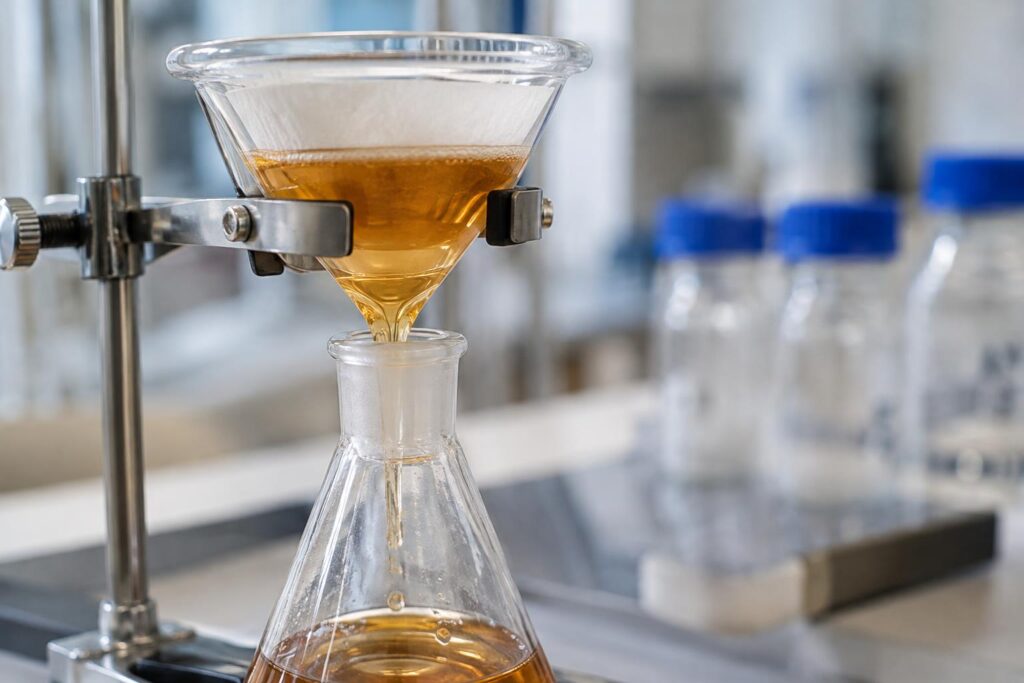
A New Way to Separate Crude Oil
Researchers have developed a method to separate crude oil without using heat. The team, led by scientists at the Korea Advanced Institute of Science and Technology and Georgia Tech, used an inexpensive and common polymer membrane. Traditional oil refining relies heavily on distillation, heating crude oil to temperatures above 350 degrees Celsius. This old process uses massive amounts of energy worldwide, contributing significantly to greenhouse gas emissions.
Turning a Filtration Flaw Into an Advantage
Normally, the buildup of material inside membrane pores is a major problem known as fouling that ruins filtration performance. However, when the researchers passed crude oil through a bare, uncoated membrane, heavier molecules gathered along the inner walls to create extremely narrow channels. These self-formed pathways allowed lighter oil fractions to pass through quickly while blocking heavier substances, achieving much higher flow rates than previous experimental designs.
Potential Impact on Global Refining
Computer simulations suggest that adding this membrane system to existing facilities could lower energy consumption by nearly a third and cut carbon dioxide emissions by over 37 percent. Refineries could install the technology as a modular unit before traditional equipment without replacing their entire infrastructure. Beyond crude oil, the technique might eventually help recycle waste plastics, purify pharmaceuticals, and improve biofuel production.
How does this story land?
One tap per reader.
Quick poll
Will oil refineries adopt membrane filtration in the next decade?
One vote per reader. Results show after you vote.
Ask this story
Answers are written by AI from this story only. They can be wrong.